Hello! My name is Ryan Casman, and this blog is my personal project for MC 459. It's all about movies and TV and lots of hard thinking. Hope you enjoy it!
Never Let Me Go, based on the 2005 novel by the same name, captures the issue of cloning and once again, the nature of humanity. The story is set in an alternate reality--one where humans have discovered the secret of living longer, healthier lives. The issue is that this is done by raising clones of the wealthy, whose organs are harvested when the original person needs them.
As a side note, it's difficult to figure out what word to use for the non-clones in this world. The book refers to them sometimes as Doppelgangers, but this is from the perspective of the clones, who are amazed to see people walking around who appear identical to them in every way.
The clones are raised in secret, initially at a boarding school named "Hailsham". Once they are of age, they're moved out to isolation--the main characters in this story are sent to live in a farm in the countryside. The clones are kept in the dark about their true purpose, and only told that they will make donations, before eventually "completing" (read: dying).
What Never Let Me Go does is connect us with these clones. They are real people, and our characters are unfortunately exposed to their purpose. They spend much of the story trying to find a way out, or a way to get more time--not too unlike the Replicants from Blade Runner. Once again, media forces us to ask ourselves: What does it mean to be human? Do these clones have souls? If they're artificial creations, born to serve a singular purpose, then do they deserve rights?
The technology introduced during the Anthropocene forces us to confront these questions. And our media seems to enjoy telling stories where the comfortable answers don't exist. Oftentimes, it seems that there are no answers to these questions at all.
There's no better way to introduce a movie than with a trailer, right? After glancing around, I realized that the trailer for GATTACA pretty perfectly sets up the questions raised by the movie's storyline.
In the near future, every human is genetically engineered. As the trailer says, success is determined not by skill, but by science. This genetic engineering creates two new, distinct social classes: the valids and the in-valids, for those who are genetically engineered and those who are not, respectively. Our main character, portrayed by Ethan Hawke, is one of these in-valids.
It's a terrible name for what is essentially a normal person. Vincent Freeman (Hawke) was born to two loving parents, but he was born by accident. Conceived and born naturally, he is sadly myopic and diagnosed with a congenital heart defect. Vincent's dream of becoming an astronaut seems unattainable, as his deficiencies as a person (if you want to call them that) resign him to a life less suited for him.
He assumes the identity of Jerome Morrow, a genetically perfect, but paralyzed former swimmer. Using Jerome's genetic samples (fingerprints, blood, and urine) he manages to sneak into the Gattaca Aerospace Corporation to achieve his dream of going to outer space.
He is reunited with his estranged brother, who is a valid citizen, and proves in a swimming competition that he is superior despite his "inferior" genetic code.
The big question raised by GATTACA is about whether our genetics truly defines who we are. Vincent is able to fool the entire Gattaca Corporation because of his mind. He's able to physically best his genetically superior brother through sheer force of will. What makes him different are invisible, apparently ineffectual differences in his genetic code.
The Anthropocene is present in this movie. Science and culture have moved to a point where humans are able to fundamentally alter themselves. Because of this new genetic engineering technology, a new form of prejudice develops.
Without getting into a lengthy discussion about social justice, I'm not entirely certain that we could trust ourselves with this kind of technology. The ability to alter our very genetic code is enticing, particularly when it comes to disease and disorder as we see Vincent struggle with. I know that I'd like to fix my vision, or maybe darken my skin tone so I don't burn so easily--that obviously runs into the realm of altering myself as I am now, rather than altering someone's genetic structure at conception, as GATTACA has.
The larger point is that it is alluring, this promise of genetic perfection. But as history shows (even recent history) people can find ways to discriminate against just about anyone. When we change the game, we can't blame people for not following the rules.
Just like Blade Runner, GATTACA makes us question what it means to be human. Is it written in our DNA, or is it something more? With all of our technology, can we ever truly beat human ingenuity?
I'm starting to think this project will pose more questions than it answers, but GATTACA seems to believe that technology isn't perfect. It may not be the enemy, but it is certainly their tool.
One of the first films I watched for this project was Ridley Scott's "Blade Runner," starring Harrison Ford.
The movie is based upon the story "Do Androids Dream of Electric Sheep?" by Philip K. Dick, a famous science fiction writer.
Set in the year 2019, the advancement of technology is far beyond what it was in the 80s, and a fair bit further than I think we can expect to be in just two years. Technology exists everywhere. Cars can fly, cities sprawl endlessly and the night is consistently lit up by neon signs. Years earlier, humans developed advanced robots, dubbed Replicants.
The Replicants are incredibly similar to humans. Visually, they're indistinguishable. They have just as much intelligence, and much greater speed and strength. Due to these abilities, Replicants were used as slave labor as humans colonized other worlds. Well, the intelligence became an issue, and the Replicants soon decided that they were self determining beings just like their creators, and rebelled.
Following this rebellion, Replicants were banned from the planet Earth. Any who returned would be hunted down by a special police force known as the Blade Runners. The job of the Blade Runner is to figure out who the Replicants are--this is typically done by a test involving a series of questions, as seen in this clip:
As the clip shows, the Replicants have shorter life spans than humans do. Rachel, the woman under interrogation, is a new sort of Replicant--one with implanted memories, to help her cope with her short life span. The test she endures is supposed to identify the Replicants much quicker. The machine Deckard uses looks at their pupils, to see how they respond involuntarily to intense questioning--a normal human would have their pupils enlarge when they told a lie. Normal humans delay their responses, while Replicants, because they are computers, are able to answer immediately.
Four fugitive Replicants arrive to Earth, and Deckard must hunt them down. Their goal is to find a way to extend their lives. Since they won't go quietly, Deckard can't use his normal interrogation tactics to hunt them down.
Here's where the philosophical crisis comes in: If it looks like a human and acts like a human, how the heck do you tell that it's not? The Replicants have to fake possessing empathy in order to blend in. The Blade Runners, on the other hand, must suppress their empathy and their morality in order to hunt down and kill the Replicants.
Following the climactic battles, we discover some of the motivation that the Replicant gang had in returning to Earth:
Roy, the Replicant leader, explains to Deckard that he's seen magnificent things--great things. But because of his short life span, those memories that he was able to create will be lost forever. He may not have had a chance to pass them down, and desperately desired more time so that he could be human.
So what does this have to do with the Anthropocene?
Well, the level of technology required to create the Replicants is beyond the robotics and artificial intelligence that we possess now, but it may not be far off. What humans in this story achieved, was the creation of artificial life, almost indistinguishable from their own. This forces the question: At what point does pretending to be human make you human? At what point does repressing humanity turn you into something else?
Maybe the broader question is about what it means to be human. What rights do we give our technology? Is technology deserving of rights and protections just like we are?
As our own technology, here in reality, continues to advance, these are questions we will have to face. If a robot is as smart as we are, and can develop emotions...who are we to say they can't have nice things?
I'm very glad you decided to ask that question. This project, first and foremost, is to think about the Anthropocene in a way that is relatable to the Average Joe. Not everyone has the time or the desire to capture what the Anthropocene is all about, after all. But I'm getting ahead of myself, so let's break this down one thing at a time:
This project is all about media, specifically movies and television. These mediums are how people today ingest stories, and how we as a culture present larger ideas than we may be used to. It's how ideas and stories reach the masses.
There's a wealth of films and shows out there that deal with messages pertaining to the Anthropocene, with messages about global warming, genetic engineering, artificial intelligence, virtual reality, and more.
Our relationship with the planet and with technology is an interesting one. We're eager to advance technology, but simultaneously uneasy about how powerful we've become. It's not a thought that gets put into so many words in daily conversation, but I figured that it might be present in the media we consume. These conversations about our technology and our power as humans abound in the media.
At first glance, there's a large amount of discomfort with technology and the global impact of humans in the stories we tell. I suppose this shouldn't be surprising, since narrative structure demands that there be some sort of conflict, and technology usually fills that role. However, the fact that we don't often strive to make stories about the benefits of technology and our power as a species is interesting to me. Do we not want to hear about it? Why can't we make a compelling story where technology saves the day? Those questions may not be answered by this project, but I at least hope to gain some insight.
So pick a movie or an episode, and feel free to read my thoughts! It goes without warning that this blog will be littered with spoilers, so don't say that I didn't warn you!
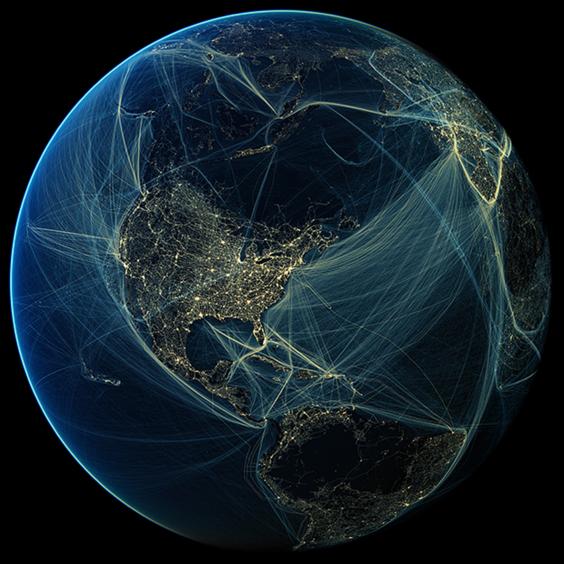
The Anthropocene is, first and foremost, the name of a new (or not-so-new) geological era that we are now living in! So congratulations, you made it! Now, of course, you may not be familiar with geological eras or any of the terminology listed on this blog--I'm going to try to keep things a simple as possible. Consider this post to be your introduction to this blog, and to the Anthropocene itself. Required reading, if you will. Now, onto the main question: What is the Anthropocene, anyway? Well, the Anthropocene, like I mentioned above, is the name of a geological era. It's a span of time in the history of our world that has been around nearly as long as humans have, and will likely never end.You may be familiar with geologic eras, but here's two examples to get you started: Hadean Era: The Hadean Era began with the formation of the Earth, and lasted until 4,000 million years ago. It's named for the Greek God Hades, who ruled the Underworld...if you can guess why, it's because the Earth was mostly a chaotic molten mess at that time. But as for an era you're more familiar with... Mesozoic Era: The Mesozoic Era lasted from about 252 million years ago to 66 million years ago. It's broken into three periods: the Triassic, the Jurassic, and the Cretaceous, which you'll surely recognize as the periods in which dinosaurs roamed the Earth. If nothing else, you've likely at least heard of the movie "Jurassic Park" and may be pleased to see a blog post dedicated to discussion of the movie. Currently, we are considered to be in the Quaternary Period of the Cenozoic Era. Within the Quaternary, we are in the Holocene, which is the recent period of warmth that has been the status of the Earth for the last 10,000 years or so. Now, that's a lot of words and not a lot of answers to the question: What is the Anthropocene? The Anthropocene is an era of geological history where the Earth, and the geological processes of it, have been altered directly by humans. Humans hunted several megafauna to extinction (like wooly mammoths). When we learned to farm, we began to change the soil and the water, and along the way created new kinds of plants from our agriculture. We settled down and built villages, towns, and cities. We built castles and fortresses. We cleared forests and carved out mountains and changed the direction of rivers. Human activity has led to the change of the climate. Through agriculture and industry and massive population explosions, humans have pumped more carbon dioxide and methane into the atmosphere than any other species is capable of. This warming has melted glaciers, raised seas, and threatened many other species on the planet for whom evolution does not act quickly enough to save. Don't let this get you down, though! The Anthropocene isn't all doom and gloom. The unstoppable march of human progress has brought with it a masterful control of the environment, and of ourselves. Without the Anthropocene we wouldn't have modern medicine, or space travel, or cell phones or computers. Because humans have taken so much control of the environment onto themselves, there's a wide variety of possibilities for what the future holds. The Anthropocene is certainly a nebulous topic. There is some debate over when it started, and that's a debate that may never end. It seeks to define when humans started to cause irreversible change to the planet, and when their change became so massive that they impacted everything else living on Earth. Hopefully that clears some things up for you! The Anthropocene is an exciting time! It's a time to wonder about the future, about the past, and marvel at our place in the world. It's time to go out and make some changes for the better, yes, but it's also a time for thoughtful introspection. So go do it! And maybe this blog can help!